Austen sigue viva: un recorrido por las mejores adaptación audiovisual
Desde la clásica miniserie de Orgullo y prejuicio hasta la reciente Emma., las versiones en cine y televisión de Jane Austen ofrecen distintas formas de acercarse a sus personajes, sus conflictos sentimentales y su ironía social.
Hay una imagen que vuelve cada vez que me*siento frente a una adaptación de Jane Austen: unaoire socialanelada, una casa de campo inundada de luz, gente young watching how the others move, and a young woman trying to understand what she feels before she manages to say it. The English writer's plots are full of balls, dances, family meals and letters, but their real engine is the tension between what people show and what they hide. More than two centuries after the publication of her first novel, Austen's work remains remarkably current on screens large and small.
Her first novel, Sentido y sensibilidad, appeared in 1811 after years of work. Elinor and Marianne Dashwood lose their home after the death of their father and have to rebuild their lives in Devonshire. One represents reason, the other emotion, and that opposition keeps generating misunderstandings, secrets and loves that seem obvious until they are not. The story has reached film and television in several notable versions, each with its own rhythm and its own way of staging that contrast.
Las versiones que siguen funcionando
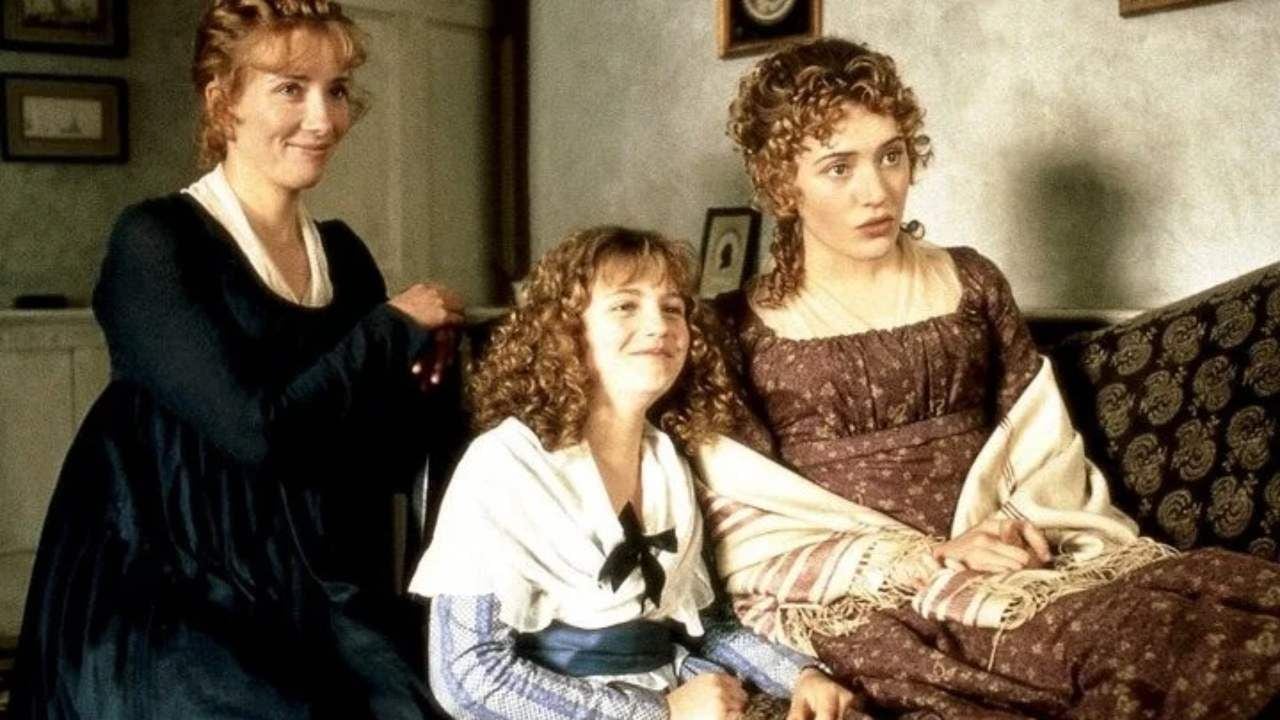
The best-known film adaptation is Ang Lee's 1995 Sentido y sensibilidad, starring Emma Thompson as Elinor, Kate Winslet as Marianne, Hugh Grant as Edward Ferrars and Alan Rickman as Colonel Brandon. Thompson also wrote the screenplay and won the Academy Award for best adapted screenplay. For those who prefer the miniseries format, the BBC produced a 2008 version with Andrew Davies as screenwriter and a cast that included Dominic Cooper, Janet McTeer, David Morrissey and a young Lucy Boynton. The BBC miniseries of Orgullo y prejuicio from 1995, with Colin Firth and Jennifer Ehle, remains the most popular television adaptation of Austen's most-adapted novel. Joe Wright's 2005 film took Keira Knightley as Elizabeth Bennet and Matthew Macfadyen as Mr Darcy, with Carey Mulligan, Rosamund Pike and Talulah Riley in supporting roles.
- For Emma, three versions stand out: the 1996 film with Gwyneth Paltrow, the BBC miniseries from 2009 with Romola Garai, and Emma. from 2020, directed by Autumn de Wilde and starring Anya Taylor-Joy, Bill Nighy, Johnny Flynn and Mia Goth. The latter is available on Prime Video.
- Clueless, from 1995, is a modern reinterpretation set in Los Angeles, with Alicia Silverstone. It transfers the original's class conflicts and social maneuvering to a 1990s high school.
- Mansfield Park has both a 1999 film adaptation with Frances O'Connor and a 2007 television version with Billie Piper and Hayley Atwell.
- La abadía de Northanger reached television in 2007 through ITV, with Felicity Jones in the lead role.
- Persuasión has been adapted several times, including a recent Netflix version starring Dakota Johnson.
What catches my attention is that Austen's stories do not depend on a single period production. The sensibility of the novels changes when a ball becomes a school dance, when a drawing room becomes a mansion, or when a letter arrives through a screen instead of a corridor. Each version can reveal a different facet of the same conflict: the fragility of social rules, the cost of economic insecurity, the difficulty of recognizing a suitable match or the mistake of believing that first impressions are enough.
In my view, the best way to approach these adaptations is not to look for the definitive one. The BBC miniseries of Orgullo y prejuicio has the elegance and humor of its era, the Ang Lee film gives Sentido y sensibilidad a classic sweep, and Emma. uses its modern visual language to turn a comedy of manners into a story full of emotional danger. Austen's work keeps renewing itself for that simple reason: although the costumes change, the doubts remain familiar. I always end a good adaptation wishing the characters had been given another chapter, because what Austen understands is precisely that life, like love, rarely follows the path we planned.